
For many children, confidence is feeling confident in their own skin, knowing how to communicate, comprehending expectations, and having faith in their own capacity to face the day. When it comes to supporting the development of this critical skill for children with autism, ABA therapy is revolutionary.

Applied behavior analysis, or ABA therapy, is shown to help children on the spectrum acquire important life skills. This transcends outward appearances and isn’t always measurable by the metrics or reports our field relies so heavily upon. How does it operate, then? What makes it so effective in confidence training and social development?

Let’s take a warm, human look at how ABA therapy benefits and creates real, empowering change in the lives of autistic children, one win at a time.

1. Positive Reinforcement That Celebrates Effort, Not Perfection

Ever seen a child light up after hearing “Great job!” or “I’m proud of you!”? That’s positive reinforcement at work. In ABA therapy, this technique is a core foundation, celebrating progress, no matter how small.

Rather than punishing what went wrong, therapists focus on rewarding what goes right. The goal is that children begin to associate therapy with happiness and success. They are led toward behavioral improvement that promotes their development rather than merely being instructed on what not to do. Additionally, that progress is tracked through meaningful data every step of the way.

Take Jack, a five-year-old who struggled to brush his own teeth, as an example. He started to look forward to his evening brushing rituals after receiving incremental, continuous reinforcement and a star-studded chart. That sense of “I did it!”? That’s confidence in the making.

2. Organized Practices that Promote Safety and Self-Sufficiency

Imagine entering a room each day without knowing what will occur. For kids with autism in particular, that uncertainty may be debilitating. The consistent structure that ABA therapy offers is one of its subtle advantages.

From a set time for learning to repeated routines and transitions, children start to feel safe. With safety comes focus, and with focus comes learning. And learning, when done successfully, builds confidence.

Structured routines also remove the mental clutter of “what now?” Instead, kids know what’s next, and they begin to take ownership of daily tasks. Getting dressed, packing their backpack, or choosing a healthy snack… every step becomes an ABA milestone, and each one boosts their belief in themselves.

3. Targeting Strengths to Build Self-Worth

Young girl in a sun dress and hat picking daisies in a meadow.

Aba therapy is often thought to focus on fixing what’s “wrong,” but what if we flipped the script? What if your therapists prioritized and celebrated what’s right?

ABA therapy benefits do just that. To introduce new language to a child who loves animals, sessions may include counting toy animals or imitating animal sounds. Lessons can be based on rail lines or schedules if they are interested in trains. Why? Because when we are interested, we all learn better.

Children start to think they’re good at other things when they see that they’re specifically excellent at something. Healthy self-confidence develops when that ripple effect is fostered. 

4. Real-World Social Development for Real-Life Confidence

Social situations can be tricky. They are full of rapid reflexes, shifting tones, and unspoken laws, but that is not to say that kids with autism can’t be successful in social settings.Rather, they would need a more thorough explanation of the social dance.

ABA therapy uses techniques like Behavioral Skills Training, or BST, and Natural Environment Teaching, otherwise known as NET to help kids go through these phases. This suggests that they are deliberate, open, and repeated in their sharing, eye contact, and questioning activities.

But here’s the beauty: these aren’t robotic lessons. They’re real, flexible tools the child can carry into playdates, classrooms, and family dinners. And each successful interaction, each “Hi!” returned with a smile, becomes a tiny pillar of social confidence.

5. Controlling Emotions to Develop Inner Strength

When a child learns to recognize and control their emotions in healthy ways, it’s a great triumph. In ABA therapy, emotional growth assists children in identifying their feelings of frustration, fear, excitement, or overload. After that, they discover what to do.

This could entail cooling off by taking slow breaths, utilizing a communication card, or going somewhere quiet. This helps them find safe ways to express valid emotions instead of feeling like they have to hold them in or feel ashamed for having them.

Over time, they react less and reflect more. They start to understand what they need in the moment. That’s not just behavioral improvement. It’s real emotional strength.

Can they handle tough feelings better? Yes, and that builds confidence they carry into all parts of life.

6. Parental Participation That Encourages Development at Home

Instead of growing in a vacuum, confidence training thrives in settings that offer constant support. As a result, parents and other caregivers are typically included in ABA therapy.

Parents can replicate treatment sessions by creating routines at home. It is imperative and a tenant of the ABA care model that they provide regular feedback and modest coaching. It could be as simple as speaking the same language or doing as the therapist says. But the result? The child feels seen, understood, and safe across every environment they occupy.

Looking for ABA therapy near me might be a parent’s first step, but what makes it truly powerful is how that therapy fits into the child’s entire world, not just the clinic.

7. Celebrating ABA Milestones, Not Just Metrics

Progress in ABA isn’t only about charts or checklists. Of course, data plays a role. But what really matters? That moment a child thinks, “I can do this.”

Maybe they’re saying their first full sentence. Or going to a birthday party without a meltdown. Even finishing a tricky puzzle can be a huge win. These moments may seem small from the outside, but they’re personal and powerful.

Take Mia, 9 years old. She used to avoid playing with others. Now, she hosts her own tea parties with cousins every weekend. Or Daniel, a teen who learned to ask for breaks at school. He felt less overwhelmed and more in control thanks to that one ability.

What exactly are we measuring, then? Not just tasks, but growth. These are examples of kids becoming more confident, in their own way and time.

Final Thoughts: A Path to Confidence That Feels Like Home

ABA therapy isn’t one-size-fits-all, and yes, it has its critics. But when it’s done with care and heart, it becomes more than science. It becomes a bridge. A strategy for getting a child from where they are to where they can be.

A steady stare, a voiced need, or even a quiet “I’ve got this” can all be signs of confidence. ABA has helped many kids achieve these victories, one tiny moment at a time, by using individualized tactics, patience, and gentle encouragement.

At Majestic Care ABA, we see these breakthroughs daily across Colorado. Our focus? Building real ABA milestones that support the whole child, not just their behavior.

Want to learn how Majestic Care ABA could support your child’s growth, too? Let’s talk today.

Reciting the alphabet and packing a backpack are not enough to prepare a child with autism for school. For many families, the journey is more involved. It entails skill development, behavior support, and confidence building. That’s where center-based ABA therapy stands out.

These centers offer a special setup. Kids learn in a structured space that also feels personal and supportive. It’s a mix that helps children not just enter the classroom, but feel ready for it.

So, why do so many families search “ABA centers near me” when school is coming up? What makes these centers a go-to option for school prep?

Let’s break down what makes them so helpful for children with autism.

A Structured Space That Feels Safe (and Fun!)

Picture this: a learning space filled with visual cues, cheerful routines, trained staff, and a handful of peers all working on similar goals. That’s what a center-based ABA setting feels like. The atmosphere is purposefully set up to resemble a classroom in many ways, but with more predictability than many first classrooms.

ABA clinics offer a highly regulated environment, in contrast to home-based therapy. Distractions like TV, toys, or family members are minimized. Opportunities to practice group skills and essential classroom routines, including learning how to sit quiet, raise your hands, respond to group directions, and take part in transitions, all of which are anticipated in a real school setting.

Does it feel stiff or sterile, though? Absolutely not. Centers are lively, fascinating, and sensory-friendly. Every child also receives dedicated behavior technician assistance. They also engage with other children, which is crucial for socialization and observational learning.

Real-World Routines That Prepare Kids for Class

One of the strongest benefits of center-based ABA therapy is the ability to simulate school routines.

Children participate in activities like:

  • Circle time
  • Group snack breaks
  • Learning centers or table work
  • Clean-up and transitions
  • Story time and movement breaks

Why does this matter? Because learning routines in a low-pressure environment builds familiarity. The bell schedule at school won’t feel so foreign when kids have already practiced how to move from one activity to the next.

Plus, therapists work on similar classroom skills like tracing, sorting, matching, and early language tasks, all without the academic pressure of grades. It’s learning through play with structure, and that sets a powerful foundation.

The Magic of Peer Modeling and Social Growth

In a classroom, kids aren’t just learning from teachers. They’re learning from each other. ABA centers recreate this dynamic. Children frequently start to mimic their peers’ hand washing, sharing, and language through observation, especially when therapists are there to model and support the behaviors.

This boosts:

  • Peer engagement
  • Turn-taking
  • Group participation
  • Classroom behavior

This social preparation is what really makes a difference. Being with other children in a supported environment can help a child who has trouble understanding group situations and picking up on social cues.

Have you ever witnessed a child’s happiness at being asked to play? Frequently practiced and encouraged in the center, these moments are stepping stones to friendships at school.

Positive Reinforcement: Self-Belief Rather Than Compliance

To make things clear, ABA therapy does not aim to make kids follow rules just to fit in. The aim is to make them feel proud about their accomplishments throughout the day.

Asking for help, finishing a task, or discreetly switching between activities are examples of helpful acts that give children a reward that has value for them and their peers. This kind of reward system builds real confidence. It sends the message, “You did it, and that feels good!”

Does that confidence stay at the center? Not at all, because it accompanies them into class, where students are more likely to interact with teachers, participate, and enjoy learning.

Tailored Learning, Down to the Detail

A male therapist guides a young child through a learning activity with colorful flashcards during ABA therapy in a bright, welcoming room.

No two children are alike, and ABA centers know this. That’s why every child has their own therapy plan.

This means:

  • Therapists track progress in real time
  • Programs adapt to meet current needs
  • Skills are taught in achievable steps
  • Data is used to inform decisions, not assumptions

Whether a child is working on making eye contact or writing their name, the plan is theirs alone. This level of personalized intervention is what makes parents search for ABA centers near me instead of relying solely on general early childhood programs.

Gentle Exposure to Transitions and Change

Let’s face it, any child may find transitions difficult. However, unexpected changes or less preferred transitions may be particularly stressful for children with autism.

These moments are performed in a gentle, low-stress manner in center-based ABA therapy. Kids get clear warnings and visual cues. For example:

“We’re going to clean up and go circle time in two minutes.”

To ensure there are no surprises, a visual schedule illustrates what will happen next.

These resources aid children in adapting to change. As time goes on, the child gets more accustomed to switching between activities. They won’t be distracted by the bell or a shift in activities when school starts. They’ve practiced how to stay calm and keep moving forward.

Enhancing Communication Skills Over Time

To be heard in the classroom, kids need more than just words. Nonverbal communication is just as important. Children receiving center-based ABA therapy consequently acquire the ability to express their needs. More so in a way that both instructors and peers can easily comprehend.

Some examples include:

  • Raising a hand
  • Asking for help
  • Requesting a break
  • Using visual cards or assistive tools

These aren’t just language skills, they’re life skills. Why does that matter? Because when a child can speak up or signal what they need, frustration goes down. That makes it easier to focus, follow routines, and build confidence during school days.

From Motor Skills to Attitude: Whole-Child Development

Although it goes deeper, center-based ABA therapy does teach early social preparation and academic skills. Many programs include motor skills, such as holding a crayon, moving with scissors, and jumping, hopping, and skipping play with others.

Kids work on:

  • Fine motor (drawing, buttoning, stacking)
  • Gross motor (climbing, balance, running)

In addition to critical motor milestones, these skills enhance confidence. More importantly, coordination and endurance during playtime or physical education, helps students get ready for formal school and build peer relationships. 

Picture this: would you like to see a child learn how to bring a toy down from a high shelf without becoming agitated? That is an example of cognitive and motor progress in the actual world.

Why Home-Based ABA May Not Be as Effective Without Center-Based ABA Support

Home-based therapy has advantages. Particularly when it comes to routine activities, generalization of skills to caregivers, or early learning.. But when the goal is school readiness, center-based ABA offers a richer, more varied experience that many families may prefer.

Here’s why many families opt for centers:

  • Interaction with other children
  • Access to specialized equipment and learning stations
  • Consistent, structured routines
  • Built-in practice for transitions and group settings
  • Less distraction than the home environment

In fact, many parents combine both approaches, using center-based sessions for school prep and home sessions for generalizing those skills.

Are You Trying to Find an ABA Center Near Me?

You are already making a significant step toward assisting your child’s future if they are getting close to preschool or kindergarten and you are looking for ABA centers in your area.

Uncertain about where to begin? Inquire about:

  • Daily routines at the center
  • Peer interaction opportunities
  • How classroom behavior and learning routines are taught
  • How progress is tracked and communicated

Final Thoughts: Confidence Is the Real Curriculum

Center-based ABA therapy isn’t just about helping kids follow classroom rules, it’s about helping them feel like they belong in the classroom.

Through social play or structured lessons, every moment at the center builds confidence step by step. Progress takes time but every small win adds up, because studying the ABCs isn’t the only thing that happens in school. It all comes down to being present, participating, and feeling prepared to do so.

That’s what Majestic Care ABA focuses on. At our Indiana centers, we help kids grow real-world skills. We aim for them to become self-assured and enjoy every little accomplishment.

Are you wondering how ABA therapy might help your child? Are you curious about what that initial step could entail?

Reach out to Majestic Care ABA today. Let’s move forward, one smile, one skill, one moment at a time.

An autism diagnosis is never just a diagnosis—it’s a flood of emotion, questions, and decisions. One moment, you’re relieved to have answers. The next, you’re overwhelmed by what comes next.

For many parents, one of the first recommendations you’ll hear is ABA therapy. But what does that actually mean? And how do you find a provider you can trust with something this important?

At Majestic Care ABA, we understand what this moment feels like. We’re here to walk beside you—not just as professionals, but as people who care deeply about your child’s growth, safety, and joy.

What Is ABA Therapy and Why Does It Matter?

Applied Behavior Analysis (ABA) is a structured, research-backed therapy that helps children on the autism spectrum build critical skills and reduce behaviors that may interfere with daily life. ABA is rooted in positive reinforcement and tailored learning—not punishment or one-size-fits-all strategies.

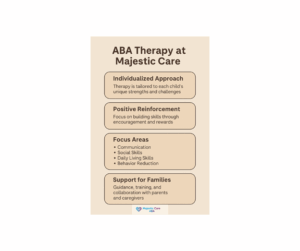
ABA therapy at Majestic Care focuses on:

  • Boosting communication and language development
  • Supporting social interaction and play
  • Teaching emotional regulation and coping skills
  • Encouraging independence with dressing, hygiene, eating, and routines
  • Reducing challenging behaviors through skill replacement, not discipline

Every child’s brain is different—so every plan is personalized.

Starting Early Makes a Difference

When ABA therapy begins shortly after diagnosis, it can set a foundation for long-term success. Early intervention has been shown to:

  • Accelerate language acquisition
  • Improve adaptive behaviors (like dressing or brushing teeth)
  • Increase focus and attention span
  • Reduce behavioral outbursts or self-harming actions
  • Support smoother school transitions and peer interactions

Just as importantly, ABA gives you—the parent—strategies to understand and support your child better every day.

A Support System That Includes the Whole Family

Majestic Care ABA isn’t just therapy—it’s a collaborative, family-focused model of care. We partner with you from day one, ensuring that:

  • Therapists take time to get to know your child’s strengths, preferences, and fears
  • Parents receive regular updates, strategies, and support—not just “homework”
  • Sessions can be held in your home or at our welcoming clinic locations in North Carolina, Colorado and

We know how much you’re carrying. Our goal is to lighten that load, not add to it.

ABA Therapy in Colorado: Where to Find Us

We’re proud to offer high-quality, compassionate ABA therapy across several Colorado communities:

  • Castle Rock, CO: Serving families in Douglas County and surrounding areas
  • Longmont, CO: A welcoming clinic near Boulder County, with in-home services available
  • Colorado Springs, CO: A full-service ABA center supporting military and civilian families alike
  • Loveland, CO: Offering flexible ABA therapy for families in Northern Colorado

Learn more about our Colorado ABA Therapy program here.

And We’re Here for Indiana Families, Too

Majestic Care ABA also provides trusted therapy across Indiana, with locations in:

You can explore our Indiana ABA Therapy services for more information.

You’re Not Alone—Let’s Take the Next Step Together

This might feel like the start of a long road—but you don’t have to walk it alone. At Majestic Care ABA, we’re here to make sure your child gets the support they deserve—and that you get the guidance, clarity, and hope you need.

📞 Call us at (888) 982-5228
 🌐 Visit majesticcareaba.com to request a consultation or learn more about ABA therapy near you.

There is help. There is a plan. And it starts with one step.


As a parent, your love for your child is profound, and your desire to help them thrive is unwavering. Deciding to begin Applied Behavior Analysis (ABA) therapy is a courageous step filled with hope, but it may also bring anxiety and uncertainty. You might wonder, How will my child respond? Am I doing the right thing? How can I support them best?

These questions are normal, and you’re not alone in asking them. This guide is here to offer clarity, reassurance, and practical strategies as you and your child begin this transformative journey with ABA therapy.

Understanding ABA Therapy: Beyond the Basics

ABA therapy isn’t a one-size-fits-all program—it’s a highly personalized, evidence-based approach to help children develop critical life skills, improve social interactions, and manage behaviors that may interfere with their daily lives. But what does ABA really look like day-to-day?

Your child’s therapist might use play-based learning to build social skills, positive reinforcement to encourage desired behaviors, or structured routines to develop practical skills like communication, hygiene, or academic readiness. As a parent, seeing ABA therapy firsthand—either through observation or detailed conversations with your provider—can demystify the process and help you feel more comfortable.

Practical Tip: Ask your provider to walk you through a typical therapy session or share a video demonstrating specific ABA techniques they use.

Visit our Indiana Locations

Communicating Openly and Honestly with Your ABA Provider

Clear and compassionate communication with your child’s therapist is key to successful ABA therapy. It’s essential that you feel safe and empowered to voice your thoughts, concerns, and questions without hesitation. Regular dialogue fosters trust, helps tailor therapy precisely to your child’s needs, and ensures you remain an active part of their journey.

Some helpful questions to ask include:

  • “What are the main goals for my child in the first month?”
  • “How can we best support these goals at home?”
  • “What strategies can we use if our child resists or becomes overwhelmed?”

Practical Tip: Schedule consistent check-ins—weekly or bi-weekly—to discuss progress, adjustments, and your child’s emotional response to therapy. Click here to view our Colorado ABA therapy locations and services.

Creating Consistent and Predictable Routines at Home

Children undergoing ABA therapy often flourish in structured, predictable environments. Consistency helps reduce anxiety, provides clarity, and reinforces new skills learned during therapy sessions. By mirroring ABA practices at home, you create a nurturing space where your child can safely explore, practice, and master new behaviors.

To foster consistency at home, you can:

  • Use visual schedules or timers to clearly outline daily routines.
  • Maintain regular mealtimes, playtimes, and bedtime routines.
  • Use the same language, rewards, and encouragement strategies your therapist implements.

Practical Tip: Work closely with your therapist to create specific home routines that align with your child’s therapy goals.

Why Positive Reinforcement Matters in ABA Therapy

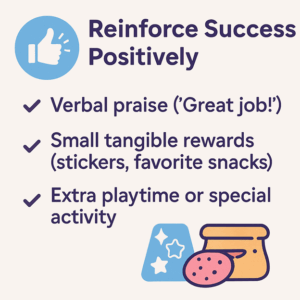
Positive reinforcement is a core part of ABA therapy—and one of the most effective ways to support your child’s growth. At Majestic Care ABA, we celebrate every win, big or small. Whether it’s through simple verbal praise like “Great job!”, small rewards such as stickers or snacks, or a special activity your child enjoys, we use these positive strategies to build confidence and motivate progress. Reinforcing success helps your child feel proud of their achievements and eager to keep learning in a safe, encouraging environment.


Prioritizing Your Own Emotional Well-being

Supporting your child through ABA therapy is rewarding, but it’s also emotionally and mentally demanding. It’s common for parents to experience fatigue, stress, or even guilt throughout the process. Remember that prioritizing your own emotional well-being isn’t a luxury—it’s a necessity. When you’re emotionally supported, you’re better able to be present, patient, and responsive to your child’s needs.

Consider these supportive strategies:

  • Join parent support groups to share experiences, challenges, and encouragement.
  • Seek individual counseling if stress or emotional overwhelm becomes significant.
  • Engage regularly in activities that restore you, whether that’s exercise, reading, hobbies, or simply quiet moments alone.

Practical Tip: Schedule regular self-care activities into your calendar just like you would important appointments or therapy sessions.

Internal Link: Access valuable resources on our Parent Resources page.

Celebrating Progress: Every Small Win Counts

ABA therapy is characterized by gradual progress, and recognizing each small win is essential. Your child’s journey will likely have ups and downs, but every step forward deserves celebration. Whether it’s your child responding positively to a new routine, displaying improved social skills, or simply showing greater comfort during sessions—acknowledge these moments openly and joyfully.

Celebrating even the smallest milestones encourages your child, reinforces positive behaviors, and motivates continued growth. It also serves as a powerful reminder of your collective strength, resilience, and unwavering support as a family.

Practical Tip: Keep a progress journal or chart visible at home to document and celebrate milestones, no matter how small.


You’re Not Alone: Connect with Compassionate Support Today

Starting ABA therapy is a big decision, but you don’t have to navigate it alone. At Majestic Care ABA, we deeply understand the challenges and emotions parents face, and we’re here to offer you genuine compassion, expert guidance, and unwavering support.

To begin this journey with a team that truly cares, please call us today at (888) 982-5228 or contact us directly online. Together, we’ll empower your child to thrive, one step at a time.


When your child is diagnosed with autism spectrum disorder (ASD), finding effective therapies can feel overwhelming. Applied Behavior Analysis (ABA) therapy is a well-established approach that has made a significant difference for many Indiana families. By addressing behaviors practically and compassionately, ABA therapy helps children build essential life skills, communication abilities, and greater independence.

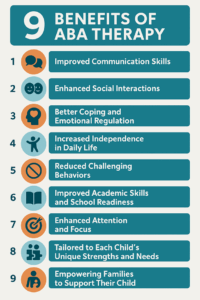
If you’re considering ABA therapy for your child, here are nine meaningful ways this approach can benefit kids right here in Indiana.

Majestic Care ABA: Accessible, Personalized Autism Therapy Across Indiana

Finding the right ABA therapy provider can be life-changing for families navigating autism. In Indiana, Majestic Care ABA offers that essential support. As part of the trusted Majestic Care network, they deliver tailored, compassionate ABA services that honor each child’s unique strengths and needs.

Majestic Care ABA’s programs are thoughtfully designed to:

  • Build foundational life and communication skills
  • Foster positive social interactions
  • Support parents and caregivers with ongoing guidance
  • Offer flexible therapy options—at home or in-center
  • Customize care based on each child’s developmental goals

Where to Find Majestic Care ABA in Indiana

With locations throughout Indiana, Majestic Care ABA makes high-quality therapy more accessible to families across the state. Their Indiana centers include:

From autism services to skilled nursing and behavioral health care, Majestic Care’s statewide network is built to meet the diverse needs of Indiana families.

1. Improved Communication Skills

One of the most valuable benefits of ABA therapy is helping children with autism develop clearer, more effective communication. ABA therapists use personalized strategies to build verbal skills, non-verbal communication, and social interaction, helping children confidently express themselves.

2. Enhanced Social Interactions

For many children on the autism spectrum, forming relationships can be challenging. ABA therapy offers practical ways to nurture positive social interactions, teaching children how to connect, play, and build friendships in ways that feel safe and achievable.

3. Better Coping and Emotional Regulation

ABA therapists provide children with coping mechanisms to navigate anxiety, frustration, or sensory overload. By learning specific tools to manage their emotions, children gain greater emotional resilience and self-confidence.

4. Increased Independence in Daily Life

ABA therapy emphasizes building practical life skills such as dressing, eating, personal hygiene, and chores. Therapists break these tasks into manageable steps, guiding children toward greater independence and pride in daily accomplishments.

5. Reduced Challenging Behaviors

Challenging behaviors, such as tantrums or aggression, often reflect unmet needs or difficulty in communication. ABA therapy addresses the root causes of these behaviors, teaching children alternative ways to express needs and reducing family stress and worry.


6. Improved Academic Skills and School Readiness

Indiana schools have increasingly embraced inclusive practices, and ABA therapy helps your child thrive in these environments. By supporting foundational academic skills and classroom behaviors, ABA prepares children to participate successfully alongside peers.

7. Enhanced Attention and Focus

ABA techniques help children increase their ability to stay focused on tasks, instructions, or play. Improving attention span and engagement positively impacts learning and enjoyment in school and home settings.

8. Tailored to Each Child’s Unique Strengths and Needs

Every child experiences autism differently. ABA therapy is highly personalized, with strategies uniquely designed around your child’s strengths, challenges, and interests, creating an environment that motivates meaningful progress.

9. Empowering Families to Support Their Child

ABA therapy in Indiana includes not only working directly with your child but also providing parents and caregivers with tools, strategies, and support. This partnership empowers families to reinforce skills at home and advocate effectively in schools and the community.

Supporting Your Family’s Journey with ABA Therapy in Indiana

Choosing ABA therapy can make a lasting impact on your child’s development and your family’s well-being. By addressing practical skills and emotional growth with empathy, ABA therapy creates new possibilities for children living with autism in Indiana.

Ready to learn more about ABA therapy options near you?

Reach out today and discover how our compassionate therapists can support your family’s next step. Whether you’re in Denver, Colorado Springs, or a quiet town tucked in the hills—Majestic ABA Care brings help to your home.

Majestic Care ABA: Supporting Your Family’s Journey

Choosing ABA therapy can profoundly impact your child’s development and your family’s quality of life. Majestic Care ABA offers compassionate and expert care designed around your child’s specific needs, fostering hope and meaningful growth for Indiana families.

📞 Ready to take the first step? Call us today at (888) 982-5228 to discuss how Majestic Care ABA can support your child and family.

When you’re a parent trying to figure out what’s best for your child, it can feel like there are more questions than answers—especially when words like autism and ABA therapy start coming into the picture.

We’re here to help make things simpler, not more overwhelming.

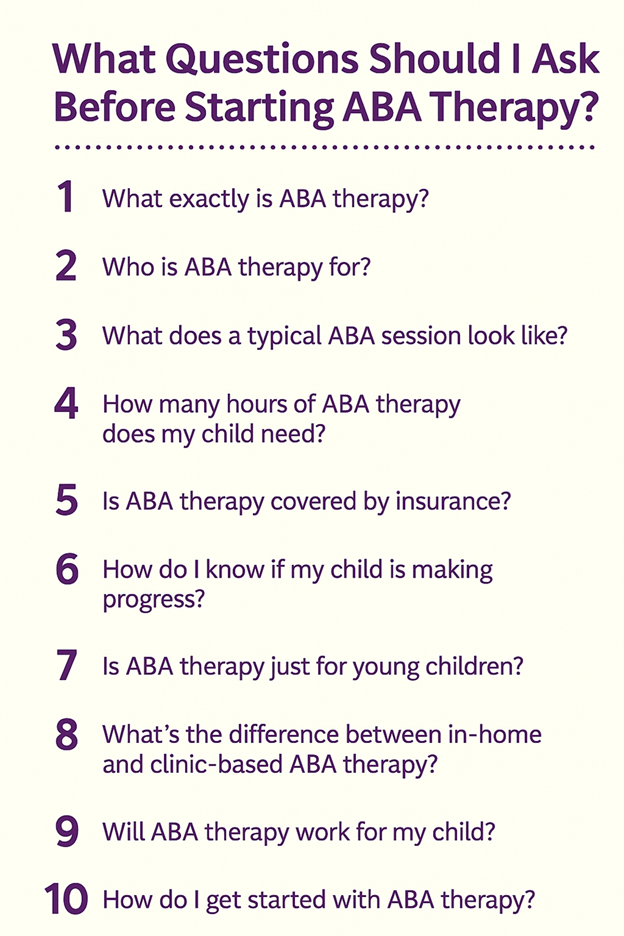
Below are the top 10 most common questions we hear from parents about ABA therapy—answered with clarity, honesty, and heart.

1. What exactly is ABA therapy?

ABA stands for Applied Behavior Analysis. It’s a therapy that uses proven techniques to help children with autism build useful life skills, reduce harmful behaviors, and learn how to better navigate their world.

ABA focuses on positive reinforcement and breaking down tasks into small, teachable steps—so your child can feel successful every step of the way. Whether you’re looking for ABA therapy in Valparaiso, Indiana or seeking support in Hobart, the core approach remains centered around your child’s unique needs.

2. Who is ABA therapy for?

ABA therapy is most commonly used to support children diagnosed with Autism Spectrum Disorder (ASD), but it can also help kids who struggle with:

  • Social skills
  • Communication delays
  • Behavioral challenges
  • Emotional regulation

We see families across Indiana—from Westfield to Schererville—come to us not just for a diagnosis, but because they’re looking for hope, tools, and real support.

3. Will ABA therapy work for my child?

While every child is unique, research shows that ABA therapy is highly effective—especially when started early and tailored to your child’s needs. Goals are personalized, and progress is tracked closely so therapists can adjust the approach as needed.

If you’re near Fishers, Indiana, our local team will work with you to create a care plan that actually fits your child—and your life.

4. What does a typical ABA session look like?

An ABA session might include:

  • Practicing communication (like using words or gestures)
  • Learning self-care tasks (like brushing teeth)
  • Social games to improve interaction
  • Calming strategies for big emotions

Sessions can happen at home, in a clinic, or even in the community. For families searching for in-home ABA therapy in Hobart or clinic-based services in Schererville, we offer flexible options to meet your child where they are.


5. How many hours of ABA therapy does my child need?

This depends on your

child’s age, goals, and challenges. Some kids benefit from 10–15 hours per week, while others may need 30+ hours of intensive support. Your BCBA (Board Certified Behavior Analyst) will assess your child and create a plan that makes sense for your family.

At our Valparaiso, Indiana location, we often work with parents to find a balance between support and school, play, or family time.

6. Is ABA therapy covered by insurance?

In many states, yes! ABA therapy is often covered by Medicaid and private insurance—especially when there’s an autism diagnosis. Your provider can help you navigate eligibility, paperwork, and pre-authorizations so you’re not alone in the process.

Our Indiana care coordinators—from Fishers to Westfield—are ready to help you make sense of coverage and find answers fast.

7. How do I know if my child is making progress?

Progress is tracked through data, but you’ll also notice real-life changes—your child might:

  • Start using more words or signs
  • Have fewer meltdowns
  • Follow routines more easily
  • Connect better with family members

Our therapists in Schererville and other Indiana locations keep you in the loop every step of the way with regular updates and progress reports you can actually understand.

8. What’s the difference between in-home and clinic-based ABA therapy?

In-home ABA therapy happens in your child’s everyday environment, which can make learning more natural. It also lets your child practice skills where they’ll actually use them.

Clinic-based ABA therapy can provide more structure and peer interaction. Some families do a mix of both.

If you’re unsure what’s best, our teams in Hobart and Valparaiso can walk you through what each option looks like and help you decide.

9. Is ABA therapy just for young children?

Nope. ABA therapy can support kids of all ages—from toddlers to teens. While early intervention is ideal, older children can still make significant progress with the right approach and support team.

Our Fishers ABA team has experience supporting children across a wide range of ages and developmental stages.

10. How do I get started with ABA therapy?

The first step is usually a consultation or intake with an ABA provider. They’ll walk you through:

  • Insurance verification
  • Assessment process
  • Creating a personalized care plan

From Schererville to Westfield, families across Indiana trust Majestic Care ABA to provide clear answers and compassionate guidance from day one.

You Don’t Have to Figure This Out Alone

At Majestic Care ABA, we support families through every step—from first questions to first breakthroughs. Whether you’re looking for ABA therapy in Indiana or just trying to understand if your child might benefit, we’re here to help with care that’s compassionate, personalized, and rooted in real results.

📍 Need care near you?
 Explore our Indiana locations for more information:

📞 Or call us today at (888) 629-7110 to speak with someone who truly gets it.


If you’re looking for in-home ABA therapy near you, chances are your world has just changed. Maybe your child was recently diagnosed with autism. Maybe you’ve been doing everything you can, but something still feels off. Whatever brought you here—you’re not alone. And you’re not without options.

What Is In-Home ABA Therapy, Really?

At its core, ABA (Applied Behavior Analysis) is about helping kids build everyday skills—like communicating what they need, handling big emotions, and feeling more comfortable in their world. In-home ABA simply brings that support to your front door. Whether you and your family are in Castle Rock or even Longmont, we’ve got you covered.

Instead of driving to a clinic, your child works one-on-one with a trained therapist right in your living room, bedroom, or backyard. They practice skills where they actually happen—whether it’s asking for help in the kitchen or handling a tough moment during playtime.

What to Expect When You Start

Getting started with ABA doesn’t have to feel overwhelming. Here’s what the process usually looks like:

  • Meet & Learn: A licensed behavior analyst meets with you and your child to get a full picture of what’s working and what’s hard.
  • Make a Plan: Together, you’ll create a game plan. Goals might include things like fewer tantrums, clearer communication, or better bedtime routines.
  • Start Sessions: A trained therapist (called an RBT) comes to your home regularly to work with your child. Sessions feel like play, but everything is intentional.
  • Track Progress: Behind the scenes, your team is tracking wins, challenges, and tweaks to make the plan stronger over time.
  • Stay Involved: You’ll be part of the process—not just watching, but learning how to support your child when the therapist isn’t around.

How In-Home ABA Helps With Real-Life Challenges

Because the therapy happens where life happens, you’ll often see progress in moments that used to feel stressful:

  • Morning routines like getting dressed or brushing teeth
  • Mealtime challenges such as picky eating or food refusal
  • Playtime struggles like sharing, taking turns, or following directions
  • Meltdowns during transitions or changes in schedule

By working on these issues in real time, therapy can feel more relevant—and wins become easier to notice.

Signs Your Child Might Benefit from ABA

If you’re not sure whether ABA therapy is right for your child, here are a few signs families often notice first:

  • Your child doesn’t speak much—or struggles to express what they need
  • They get upset easily and have a hard time calming down
  • Transitions (like leaving the house or changing activities) are intense
  • They repeat certain actions a lot or seem stuck in routines
  • Social moments—like playing with others or making eye contact—feel really hard

You don’t need to have all the answers. If some of this sounds familiar, it might be time to explore support.


What Makes In-Home ABA Different From Center-Based Programs?

Some children thrive in busy centers. Others do better at home. Here’s how in-home ABA therapy stands out:

  • Familiar Environment: Kids are more relaxed and confident in their own space.
  • Real-Life Learning: Skills are practiced where they’ll be used every day.
  • Fewer Disruptions: No commutes, schedule juggling, or waiting rooms.
  • Parent Involvement: You get to observe, ask questions, and learn alongside your child.

For many families, the flexibility and personal nature of in-home care make it the right fit.

Why Families in Colorado Love the In-Home Option

Getting to a clinic can be hard—especially with work schedules, other kids, or long drives. In-home ABA removes that barrier. But it also does something deeper: it meets your child in the place they feel safest.

Therapists see real moments—what your mornings look like, how your child handles frustration, where they shine. That means the support is more personal, more useful, and more likely to stick.

Whether you’re in Denver, Colorado Springs, or a quiet town tucked in the hills—Majestic ABA Care brings help to your home.

How to Take the First Step

You don’t need a perfect plan. You just need a starting place.

Our team can help with everything from checking insurance to answering questions like “What does a session look like?” or “How do I know if this is working?”

📍 Learn more about our in-home ABA therapy services in Colorado and what support could look like in your home.

📞 Let’s Talk

Call Majestic ABA Care at (888) 629-7110. We’ll walk you through the process, answer your questions, and help you find out if in-home ABA is the right fit for your family.


Discovering ABA therapy is a major win. As a parent, you’ve already cleared so many hurdles to get here—finding support, asking hard questions, showing up for your child. Now, you’re wondering: What can I do at home to help? This guide is for you. Practical, encouraging, and full of examples from everyday life in Colorado.

Understand the Importance of Generalization

Generalization means your child can use new skills beyond the therapy session—at school, at home, or in the grocery store. It’s the difference between learning how to ask for help during a session… and actually doing it when their favorite toy is out of reach at home.

Example:
Your child learns to ask for “more” during a snack session in the clinic. Later that week, during dinner in your Colorado Springs home, they reach out and say “more” when they want a second helping of mashed potatoes. That’s generalization—and it’s a big deal.

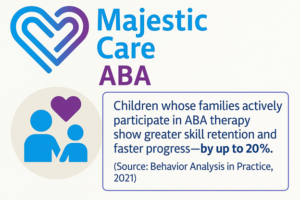
“Children whose families actively participate in ABA therapy show greater skill retention and faster progress—by up to 20%.” (Source: Behavior Analysis in Practice, 2021)

Collaborate with Your BCBA

Your Board Certified Behavior Analyst (BCBA) is your partner. They can offer insight into your child’s progress and show you how to reinforce skills in daily life. Don’t wait for big questions—small updates and observations help, too.

Example:
You notice your child is starting to tolerate brushing their teeth better when you play a song. You share this with your BCBA in Fort Collins, and they help you turn that into a consistent reinforcement routine to build on that success.

Incorporate ABA Strategies into Daily Routines

You don’t need to “be the therapist.” You just need to know what helps—and how to spot teachable moments.

Examples:

  • Positive Reinforcement: When your child waits their turn during play, you say, “I saw that—you waited so patiently! High five!” It boosts the likelihood they’ll do it again.
  • Prompting and Fading: You show them how to zip up their jacket before leaving your Loveland home. At first, you guide their hands. Over time, you step back and let them try on their own.
  • Modeling: You say, “Can I have a turn?” while reaching for a toy. Your child sees the behavior modeled clearly, and one day, they try it too.

Establish Consistent Routines

Routines help children feel secure—and they’re perfect for practicing skills across different parts of the day.

Example:
Every morning, you review a visual schedule: wake up, get dressed, eat breakfast, go to ABA. By using the same visual structure daily, your child learns what to expect—and transitions get smoother. Your Loveland BCBA might even help you customize these visuals for weekends or holidays.

Celebrate Progress Together

Progress in ABA isn’t always big leaps—it’s the little things that add up.

Examples:

  • Your child makes eye contact during a bedtime story for the first time. You pause, smile, and say, “I love it when you look at me like that.”
  • They wave goodbye to a therapist after a session. You celebrate with an extra story at bedtime—something they look forward to.
  • Your BCBA sends a milestone update: “Your child independently requested a break today!” You print it out and hang it on the fridge.

Leverage Local Resources

Majestic Care ABA offers support across Colorado—including Colorado Springs, Fort Collins, and Loveland—with personalized therapy that includes parent coaching and real-time feedback.

Example:
During a clinic visit in Fort Collins, your therapist invites you to observe a session and shows you how they’re reinforcing “first/then” language. You start using it at home—“First brush teeth, then TV”—and it helps your child move through transitions with fewer meltdowns.

Explore Our Locations:

The work you do at home is just as important as the therapy sessions themselves. And you don’t have to do it alone. With the right tools, support, and encouragement, you can help your child grow with confidence—right where they are.

Contact Us:
📞 (888) 629-7110
📧 info@majesticcareaba.com
🌐 Majestic Care ABA Therapy in Colorado

They’re learning every day—and so are you. Let’s keep going, together.

As a mom navigating the world of autism and ABA therapy in Colorado, I’ve discovered that the best learning often happens outside the therapy room. Integrating ABA principles into everyday outings not only reinforces my child’s development but also makes our adventures more meaningful. Here are five sensory-friendly places in Colorado where fun meets function, perfectly complementing the skills we’re building through ABA therapy.

1. The Sensory Club – Englewood

This membership-based sensory gym is a haven for children with autism. With equipment like swings, crash pads, and a multi-sensory environment room, it’s an ideal place to practice gross motor skills and self-regulation strategies. The controlled environment allows for the application of ABA techniques such as prompting and positive reinforcement in a real-world setting.https://www.thesensoryclub.com/denver/

📍 4301 S. Federal Blvd Suite 102/103, Englewood, CO 80110
🔗 Visit The Sensory Club

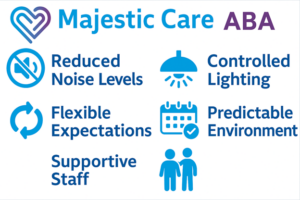
Five ingredients of a sensory friendly environment

2. Butterfly Pavilion – Westminster

The Butterfly Pavilion offers Sensory Friendly Afternoons with natural lighting, quiet tones, and limited admission. It’s a fantastic setting to work on social skills and communication. Using ABA strategies, we practice initiating conversations about the exhibits and following multi-step instructions during our visit butterflies.org/sensory-friendly.

📍 6252 W. 104th Avenue, Westminster, CO 80020
🔗 Explore Sensory Friendly Afternoons

3. WOW! Children’s Museum – Lafayette

WOW! hosts Sensory Friendly Playtime sessions, reducing noise and crowd levels to create a comfortable environment.These sessions are perfect for practicing play skills, turn-taking, and following routines. The museum’s exhibits provide natural opportunities to apply ABA principles like modeling and reinforcement.wowchildrensmuseum.org+1en.wikipedia.org+1

📍 110 N. Harrison Ave, Lafayette, CO 80026
🔗 Learn About Sensory Friendly Playtimeen.wikipedia.org+1wowchildrensmuseum.org+1

4. Children’s Museum of Denver at Marsico Campus

During Low-Sensory Evenings, the museum adjusts lighting and sound to accommodate sensory sensitivities. It’s an excellent venue for generalizing skills learned in ABA therapy, such as waiting, sharing, and requesting. The diverse exhibits encourage exploration and communication in a supportive setting.allrecipes.com+4mychildsmuseum.org+4denver.org+4

📍 2121 Children’s Museum Drive, Denver, CO 80211
🔗 Check Out Low-Sensory Evenings

5. Water World – Federal Heights

As Colorado’s first Certified Autism Center, Water World offers sensory guides, a low-sensory room, and trained staff to assist families. This environment supports the application of ABA techniques in a fun, dynamic setting, helping children practice adaptability and coping strategies waterworldcolorado.com.

📍 8801 N. Pecos St., Federal Heights, CO 80260
🔗 Discover Water World’s Accessibility Featureswaterworldcolorado.com

Integrating ABA therapy principles into everyday outings has been transformative for our family. These Colorado destinations not only provide enjoyable experiences but also reinforce the skills we’re working on in therapy. Remember, every adventure is an opportunity for growth.

Empower your child’s development through meaningful experiences.


There’s More to ABA Therapy Than Meets the Eye

If you’ve been researching support for your child with autism, you’ve likely come across ABA therapy—and maybe even heard about in-home options. But what most people don’t realize is how deeply personal, flexible, and transformative ABA therapy can be when it’s delivered where your child feels safest: home.

At Majestic ABA Therapy, we meet your child where they are—literally and emotionally. Below are eight surprising, often overlooked ways that in-home ABA therapy helps kids with autism build confidence, independence, and joy—right in their everyday environment.

1. It Turns Your Home into a Learning Playground

Children thrive when they learn in spaces they already trust. In-home ABA therapy takes familiar routines—like getting dressed, brushing teeth, or sharing toys—and turns them into skill-building opportunities. It’s therapy that feels like life, not a clinic.

2. Your Child’s Real-Life Triggers Become Teaching Moments

Does your child struggle during transitions, mealtime, or bedtime? In-home therapy allows us to observe and respond to real-time behaviors in the actual environment where they happen. That means faster insight and more meaningful progress.

3. You’re Not Just Watching—You’re Learning Too

In-home sessions naturally involve parents and caregivers. That means you’ll gain practical tools, strategies, and confidence—not just to support your child during therapy but to reinforce their growth in everyday moments.

4. We Work Around Your Family’s Schedule—Not the Other Way Around

Clinic-based therapy often means long drives, scheduled reshuffles, and missed work or school. With Majestic’s in-home ABA services in Indiana, we fit therapy into your life, so your family routines stay intact.

5. Progress Happens Faster When Kids Feel Safe

For many children on the spectrum, new places and people can be overwhelming. Home-based therapy provides consistency and calm, which helps reduce anxiety and opens the door to faster, more sustainable learning.

6. It’s Custom-Tailored to Your Child’s Needs and Strengths

There’s no one-size-fits-all here. We use evidence-based ABA strategies, but how we apply them depends entirely on your child’s personality, communication style, and goals. From nonverbal learners to those ready to build peer skills, every plan is personalized.


7. We Help You Build Lifelong Routines

From potty training to homework routines, in-home ABA therapy in Indiana doesn’t just address behaviors—it builds lasting daily life systems that support your child’s independence now and in the future.

8. You’ll Have a Full Team Behind You—Not Just a Therapist

Majestic ABA Therapy brings you a whole care team: behavior technicians, supervising BCBAs, and compassionate coordinators who keep you in the loop. You’re never doing this alone. And every step is backed by experience, empathy, and data-driven care.

What Happens After You Decide to Start?

Once you’re ready to begin, we’ll guide you through a simple intake process that includes:

  • A comprehensive behavioral assessment
  • Personalized treatment planning
  • Insurance support and flexible scheduling

Whether you’re just starting the search or feeling unsure about next steps, we’re here to answer all your questions—big or small.

🌍 Areas We Serve: In-Home ABA Therapy Across Indiana

We proudly bring personalized ABA services to families across Indiana. If you’re searching for in-home ABA therapy near you, we’re here to help.

Now offering:

📍 Don’t see your city listed?
 We’re growing! Call (888) 982-5228 to ask about in-home ABA therapy in your area—or contact us here.

Ready to Help Your Child Thrive at Home?

You don’t have to figure this out alone. Majestic ABA Therapy is here to offer in home ABA therapy in Indiana over many counties and cities listed here. Our goal is to support your child—and your whole family—with care that’s effective, empowering, and delivered where it matters most: home.

📞 Call us today at (888) 982-5228
 🌐 Or visit our In-Home ABA Services page to take the first step

If you’re a parent or caregiver of a child with autism, finding the right therapy services can feel overwhelming. In Indiana, one of the most effective and widely recommended treatments is Applied Behavior Analysis (ABA) therapy. But knowing how to start, where to look, and what to expect can be a challenge. This guide is here to help you understand ABA therapy and how to find trusted providers across Indiana. If you’re looking for ABA therapy near you in Crown Point, Indiana, Majestic Care ABA Therapy is here to help. Contact us today for a free consultation and learn how our expert team can support your child’s developmental journey.

How to Find ABA Therapy in Indiana: A Complete Guide for Families

For families navigating an autism diagnosis, finding the right therapy can feel overwhelming. Applied Behavior Analysis (ABA) therapy is one of the most effective, research-backed treatments for children with autism spectrum disorder (ASD). But how do you find the right provider in Indiana? What should you look for? How do you ensure your child receives the best possible care?

This guide will walk you through everything you need to know about ABA therapy in Indiana, what to expect, and how to connect with Majestic Care ABA, a trusted provider serving families across the state.

What is ABA Therapy?

ABA therapy is a science-based approach that helps children develop essential life skills by encouraging positive behaviors and reducing those that interfere with learning or independence. It is widely recognized as the gold standard for autism treatment and is endorsed by the U.S. Surgeon General and the American Psychological Association.

ABA therapy is based on behavioral principles, focusing on reinforcement and repetition to help children learn new skills. Every therapy plan is personalized, targeting areas such as:

  • Communication and Language Development – Helping nonverbal or minimally verbal children build expressive and receptive language skills.
  • Social Skills – Teaching children how to interact with peers, share, take turns, and develop friendships.
  • Daily Living Skills – Improving abilities such as brushing teeth, getting dressed, and using the restroom independently.
  • Emotional Regulation – Helping children recognize emotions, cope with frustrations, and manage stress.
  • Academic Readiness – Enhancing focus, attention, problem-solving, and pre-academic skills.
  • Reduction of Challenging Behaviors – Addressing behaviors like aggression, self-injury, or repetitive actions that interfere with learning.

Why is ABA Therapy Important?
 Research shows that early intervention leads to better long-term outcomes. Children who start ABA therapy at a young age often show significant improvements in communication, socialization, and independence. However, ABA is also beneficial for older children, teens, and even adults with autism who need additional support in managing behaviors or life transitions.

How to Find ABA Therapy in Indiana

When looking for ABA therapy providers in Indiana, here’s what to consider:

1. Qualified & Licensed Providers

Ensure that the provider employs experienced, credentialed professionals such as Board Certified Behavior Analysts (BCBAs) and Registered Behavior Technicians (RBTs).

2. Individualized Treatment Plans

Each child should have a personalized plan tailored to their strengths, challenges, and goals.

3. Family Involvement

Family participation is key to long-term progress. Choose a provider that includes parent training and ongoing communication.

4. Accessible Locations

Look for a provider with locations close to home or offering in-home services.

5. Insurance & Affordability

Verify that the provider works with your insurance and can help you understand your benefits.


Majestic Care ABA: Serving Families Across Indiana

One trusted provider in Indiana is Majestic Care ABA. Their mission is to deliver compassionate, individualized ABA therapy that empowers children and families. Majestic Care ABA is part of the broader Majestic Care network, which is committed to enhancing the lives of individuals through healthcare services across Indiana.

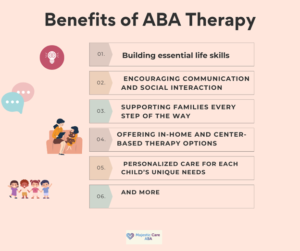
At Majestic Care ABA, our therapy programs are focused on:

✅ Building essential life skills
✅ Encouraging communication and social interaction
✅ Supporting families every step of the way
✅ Offering in-home and center-based therapy options
✅ Personalized care for each child’s unique needs

Majestic Care Locations in Indiana

Majestic Care has numerous locations throughout Indiana, making it easier for families to access the support they need. Their Indiana locations include:

  • Griffith
  • Hobart
  • Merrillville
  • Valparaiso
  • Carmel
  • Fishers
  • Westfield
  • Crown Point (Home of Majestic Care ABA therapy)

Whether you’re looking for behavioral health services, skilled nursing, or ABA therapy, Majestic Care’s network is designed to meet your family’s needs.

Getting Started with ABA Therapy

If you’re ready to explore ABA therapy for your child, the first step is to connect with a trusted provider like Majestic Care ABA. Their team will guide you through the process—from understanding your insurance coverage to creating a customized treatment plan for your child.

Early intervention can make a life-changing difference. With the right support, your child can gain the skills and confidence to thrive. Contact us today for a free consultation and learn how our expert team can support your child’s developmental journey.

Autism spectrum disorder (ASD) refers to a range of conditions characterized by challenges with social skills, repetitive behaviors, speech and nonverbal communication. We now know that autism occurs on a spectrum, with a wide degree of severity and combinations of symptoms.

Common Signs and Symptoms

While autism is different for each person, some common signs tend to emerge early in childhood:

  • Lack of or delay in spoken language
  • Repetitive use of language and/or motor movements
  • Little or limited eye contact
  • Lack of interest in peer relationships
  • Delay in basic motor skills like walking or gestures
  • Fixated intensity and focus on objects/topics
  • Adverse response to sensory stimuli

Autism symptoms can appear by age 2-3, though some less obvious symptoms may emerge earlier. Diagnosis often occurs around ages 3-5 as communication delays or behavioral patterns begin to manifest more clearly.

The severity of symptoms varies widely. Some individuals may be able to function independently in adulthood while others require life-long supportive care. Early intervention is key to improving development.

Speaking with a doctor is the first step if your child shows any signs of delayed development, especially by 18 months old. Autism-specific screening is recommended whenever developmental delays are suspected.

If an autism diagnosis occurs, remember you are not alone. Build an educational and therapeutic team to support your child’s unique needs. With the right treatment plan, those with autism can thrive and overcome obstacles as they grow.

New ABA Therapy Center in the South Bend, Indiana– Enroll Today!

We’re in South Bend, Indiana and ready to serve. Our ABA therapy center combines focused care with effective systems to support your child’s success. Spots are limited—claim yours today!