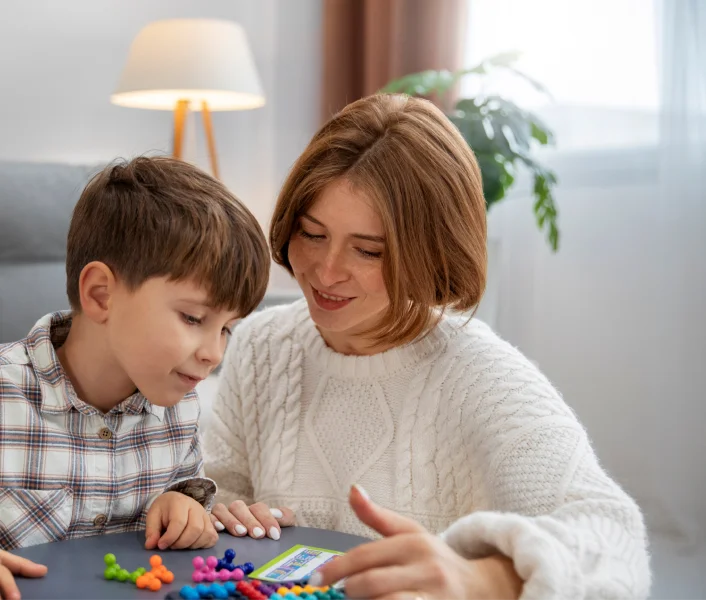
Majestic Care ABA Therapy in Colorado provides individualized, evidence-based ABA therapy to support children with autism in building communication skills, fostering social development, and gaining independence.
At Majestic Care ABA Therapy, we believe that every child deserves the opportunity to reach their full potential. Our comprehensive ABA services are designed to support children in overcoming developmental challenges, building essential life skills, and gaining confidence in their abilities. We take a family-centered approach, ensuring that parents and caregivers are actively involved in the therapeutic process for lasting success.
At Majestic Care ABA Therapy, we understand that navigating insurance coverage for ABA therapy can feel overwhelming. Our dedicated team is here to make the process simple and stress-free by helping you confirm your treatment coverage.
At Majestic Care ABA Therapy, we proudly serve families across multiple states, offering compassionate, high-quality ABA therapy in convenient locations. Our centers are designed to provide a supportive and structured environment where children can learn, grow, and thrive with the guidance of experienced professionals. Whether you’re looking for in-home, clinic-based, or community-centered therapy, we are here to support your family every step of the way.
Majestic Care ABA Therapy in Colorado provides individualized, evidence-based ABA therapy to support children with autism in building communication skills, fostering social development, and gaining independence.
Majestic Care ABA Therapy in North Carolina offers compassionate, evidence-based ABA therapy to help children with autism develop essential life skills, enhance social interactions, and achieve greater independence.
Majestic Care ABA Therapy in South Bend, Indiana, provides personalized, evidence-based ABA therapy to support children with autism in developing communication, social, and daily living skills for greater independence and success.
Majestic Care ABA Therapy in McCordsville, Indiana, offers individualized, evidence-based ABA therapy to help children with autism build essential life skills, improve communication, and foster independence.
Majestic Care ABA Therapy in Westfield, Indiana, provides tailored, evidence-based ABA therapy to help children with autism develop communication, social, and daily living skills in a supportive and nurturing environment.
Majestic Care ABA Therapy in Fishers, Indiana, offers compassionate, evidence-based ABA therapy to help children with autism build essential skills, enhance social interactions, and achieve greater independence.
Contact us to discuss your child’s needs and complete paperwork.
A BCBA evaluates your child, and we assist with insurance approval.
We create a personalized ABA plan and begin therapy sessions.
Stay informed with the latest in ABA therapy, autism research, and developmental insights through the Majestic Care ABA Therapy Blog. Our blog serves as a valuable resource for parents, caregivers, and professionals looking to expand their knowledge and stay updated on the latest trends in behavioral therapy and child development.
Applied Behavior Analysis (ABA) has transformed how children on the autism spectrum learn and develop. Through structured strategies, ABA focuses on increasing positive behaviors using techniques grounded in research. One of the most effective strategies is positive reinforcement for autism, a method where rewarding desired behaviors strengthens their recurrence. By understanding how reinforcement works, families and educators can help children grow, socially interact, and develop daily skills in a motivating, enjoyable way. Curious how ABA reinforcement strategies, autism reward systems, and behavior shaping work in real life? Read on to explore practical techniques, real-world examples, and proven ways to support meaningful behavior improvement.
Meet Larry, a seven-year-old child on the autism spectrum who struggles with staying seated during group activities. Larry’s ABA therapist decides to use a reward system autism approach to help him develop this skill. Every time Larry remains seated for five minutes, he earns a small token. Once he collects five tokens, he can trade them for a preferred activity, playing with a favorite toy or a short art session.
The process works because it combines ABA reinforcement strategies with tangible reinforcement, teaching behavior autism while creating an immediate link between effort and reward. Over several weeks, Larry progresses to ten-minute intervals, showing measurable autism behavior improvement. Social reinforcement, such as verbal praise from his therapist, further encourages Larry to repeat this behavior across different settings, from therapy sessions to home activities. Structured reward systems like this can effectively increase desirable behavior over time.

Behavior shaping autism is a step-by-step method used in ABA behavior therapy to teach complex skills. Instead of expecting a child to complete a skill perfectly from the start, therapists break it down into smaller, achievable actions, rewarding each step along the way.
Example: Teaching a child to wash hands independently.
By shaping behavior in small increments, ABA behavior therapy ensures that children experience success consistently. This method can improve skill acquisition rates compared to non-reinforced practice. Behavior shaping autism also emphasizes fading rewards gradually, helping children internalize behaviors and maintain autonomy while reinforcing desired actions in various contexts.

Autism behavior improvement refers to the overall enhancement of social, communication, and daily living skills through consistent reinforcement. Effective ABA reinforcement strategies focus on identifying highly motivating rewards tailored to each child’s preferences.
Key strategies include:
For example, a child learning to greet peers appropriately in class might receive immediate verbal praise for saying “hello” and a token for participation. Over time, the child learns that greeting others leads to positive outcomes, supporting social skill development. Research suggests that reinforcement-based interventions can improve functional communication skills in children on the autism spectrum by up to 45% over six months (Lovaas, 1987).
| Strategy | How It Works | Benefits |
| Tangible Reinforcement | Rewards like toys or stickers after desired behavior | Immediate, visual feedback that strengthens learning |
| Social Reinforcement | Praise, high-fives, attention | Boosts self-esteem and promotes emotional engagement |
| Activity Reinforcement | Access to preferred activities after completing tasks | Connects effort with enjoyable outcomes |
| Token Systems | Earn tokens for behaviors, exchange for rewards | Teaches delayed gratification and tracking progress |
These approaches ensure children stay motivated while learning important skills. For instance, in a classroom, using token boards for completing tasks can increase engagement and reduce disruptions, fostering a positive learning environment.
Creating a reward system for autism doesn’t end in the therapy center. At home or in school, consistent reinforcement fosters generalization. Here’s how it can look:
Structured systems like these create predictable and motivating environments. Children learn that their efforts are recognized, which increases repetition of positive behaviors. Over time, as reinforcement is gradually faded, the child internalizes these behaviors, leading to sustained autism behavior improvement.
Reward systems are most effective when integrated with ABA behavior therapy. Therapists use behavior data to adjust reinforcement types, frequency, and timing. This ensures that rewards remain motivating and relevant as children grow and develop new skills.
For example, a child may initially respond well to tangible rewards but later become more motivated by activity-based rewards or social praise. ABA reinforcement strategies help practitioners identify these shifts and adapt accordingly. This adaptability maximizes engagement and accelerates skill acquisition, ultimately promoting lasting autism behavior improvement.
In ABA, a reinforcer is something that, when given after a behavior, makes that behavior more likely to happen again. A reward is any item or praise given after a behavior. If it does not increase the behavior in the future, it is not technically a reinforcer.
Yes, over-reliance on external rewards, like stickers or treats, can happen. The goal is to transition to natural reinforcers, such as enjoying social praise or achieving a small goal. Effective ABA plans gradually fade reinforcement as skills become routine.
This is common. ABA therapists perform preference assessments to find unique, motivating items or activities. These might include specific sounds, sensory experiences, or a brief moment of a favorite activity. Motivation drives learning.
Indirectly, yes. Instead of punishing unwanted behaviors, ABA strengthens alternative, appropriate actions. For example, a child who screams for attention may be reinforced for raising a hand or using words to ask for it. This approach is called Differential Reinforcement of Alternative behavior (DRA).
These are “all-purpose” rewards that can be traded for lots of things a child likes, such as toys, snacks, or fun activities. They’re useful because they work in many situations and don’t rely on just one type of reward.
Example: A child earns a token for completing a task. Later, they can exchange several tokens for extra playtime, a favorite snack, or a small toy.

Using ABA reinforcement strategies and thoughtful reward systems helps children on the autism spectrum develop meaningful behaviors, strengthen social skills, and achieve measurable progress. At Majestic Care ABA, we create structured, positive, and personalized plans that support growth, learning, and success across multiple settings.
Families in North Carolina have observed children participate more actively, develop practical life skills, and use learned behaviors at home, school, or in the community. By tailoring strategies to each child’s unique motivators, progress becomes clear and sustainable.
Our team at Majestic Care ABA partners with you to ensure every approach fits your child’s needs. Reach out today to explore how our ABA programs provide consistent reinforcement while supporting ongoing development and strengthening positive behaviors.
After your child receives an autism diagnosis, the next step is often Applied Behavior Analysis (ABA) therapy. This journey usually begins with a first ABA assessment. For many parents, this step can feel overwhelming. Questions swirl in your mind: What will happen during ABA intake? How long does it take? How will my child respond? Don’t worry. Understanding the process can make it less stressful and more empowering.
An ABA therapy evaluation is more than a routine test. It forms the foundation for a personalized therapy plan. Skilled professionals partner with you and your child to understand strengths, challenges, and needs. This guide will walk you through what to expect during the ABA initial evaluation, preparing for ABA, and how results shape your child’s therapy journey. Curious about the step-by-step process and how it sets the stage for progress? Let’s dive in.
Meet Charles, a bright 4-year-old with autism. His parents felt a mix of nerves and hope before his first ABA assessment. They scheduled the session with Ms. Elena, a Board Certified Behavior Analyst (BCBA).
Ms. Elena began by observing Charles in play. He lined up toy cars carefully, showing his love for patterns and numbers. She also spoke with his parents, learning he became anxious in noisy or crowded spaces. This information was crucial.
Next, she used a tool like the Verbal Behavior Milestones Assessment (VB-MAPP) to evaluate Charles’s language skills. It showed he used many words but struggled with “why” questions. The complete ABA intake process took a few sessions. It helped Ms. Elena identify his strengths, like counting, and challenges, like expressive communication and sensory sensitivity.
The resulting plan focused on building communication strategies and coping tools for sensory overload. This approach avoided generic therapy, ensuring each intervention was meaningful for Charles.

The first ABA assessment is where autism therapy begins. A BCBA leads this comprehensive evaluation to answer two main questions:
The BCBA observes behaviors, social skills, communication, and daily living abilities. This assessment checks if ABA’s structured, data-driven approach can support your child.
By discussing your family’s goals and concerns, the BCBA creates a tailored plan. This plan targets specific skills and behaviors to support growth and independence.
Example: During a first ABA assessment, a 5-year-old child with limited verbal communication might be observed during play. The BCBA notes the child struggles to request toys and becomes frustrated easily. Based on these observations, the BCBA recommends a treatment plan focused on teaching functional communication skills using visual supports and positive reinforcement, while gradually building social interaction during group activities.

A BCBA gathers data using observations, interviews, and standardized tools. Here’s what they focus on:
The team talks with you and observes your child in multiple settings. Knowing strengths helps highlight potential learning pathways. Weaknesses pinpoint areas for skill building.
Target behaviors are what therapy focuses on, skills to build or behaviors to reduce. Prioritizing targets is based on what most improves quality of life. For instance, functional communication often takes priority over less impactful behaviors.
Before therapy begins, practitioners measure how often, how long, and how intensely behaviors occur. Baseline data tracks progress and ensures interventions are measurable.
Communication is central to social and academic growth. Evaluation determines if speech therapy or alternative communication methods are necessary.
BCBAs observe interactions with family and peers. Understanding social patterns guides strategies to strengthen friendships and cooperative skills.
This includes self-care, hygiene, dressing, and feeding. Evaluating these skills helps identify areas for independence training.
The ABA intake process is structured to be comfortable for your child and informative for you.
Parents are experts on their child. In this session, you:
Parent input is essential. Studies indicate caregiver reports provide valuable, sometimes overlooked, information for shaping interventions.
The BCBA observes your child during play and daily routines. This may take place at home, school, or a therapy center. They note:
Play may look simple, but it reveals critical skills.
Standardized assessments check skills in communication, adaptive behavior, social interaction, and problem behavior. Common tools include:
| Assessment Type | Skills Checked | Example Tools |
| Communication | Language, talking, listening | VB-MAPP |
| Adaptive Skills | Daily living, independence | Vineland Adaptive Behavior Scales (VABS-3) |
| Social Skills | Interaction, conversation | Social Responsiveness Scale (SRS-2) |
| Problem Behavior | Triggers and functions | Functional Behavior Assessment (FBA) |
FBA is a core part of understanding challenging behaviors. It answers why a behavior occurs. Common reasons include seeking attention, escaping tasks, or obtaining an item. The FBA observes:
This information helps the BCBA design positive behavior support plans that teach alternative skills rather than punish unwanted behaviors.
The assessment bridges autism diagnosis to effective therapy. Data gathered shapes individualized treatment plans. Each plan focuses on a child’s strengths and addresses areas for improvement. Tailoring increases the chances of meaningful progress.
Plans are built to reflect:
Generic approaches rarely work. Personalized ABA therapy increases engagement and outcomes.
ABA relies on data. The initial evaluation provides baseline measures and identifies target behaviors. These allow parents and therapists to monitor growth objectively. When skills improve, plans are adjusted to introduce new goals or modify strategies.
Understanding the function of behaviors allows therapists to:
This proactive strategy supports both the child and the family, creating a calmer, more predictable environment.
Parents gain practical strategies to support skill generalization at home. You become an active part of therapy, reinforcing new skills outside structured sessions. Research shows family involvement improves long-term outcomes.
Once the evaluation is complete, the BCBA reviews results with you. They explain:
The team submits the report and treatment plan to insurance for approval. Once authorized, therapy begins.
Growth continues beyond the first evaluation. Regular reviews, often every six months, allow the team to:
This ensures therapy remains effective and responsive to your child’s evolving needs.
No. The assessment focuses on current skills. Therapists want to see what your child can do now to plan the next steps.
A little preparation helps. You can explain that they will meet a friendly professional to play and talk. Keep it light, like visiting a new playground. Avoid pressure.
That’s okay. Observing real behavior, even on a difficult day, gives the BCBA essential data. They are trained to respond safely and constructively.
Typically, one to two weeks for the BCBA to compile data and write the plan. Insurance approval may add time. You will receive updates throughout.
The goal is independence. ABA teaches essential skills to reduce the need for constant intervention. Progress is continuous, and the plan evolves as your child grows.

The first ABA assessment can feel unfamiliar, but knowing what to expect builds confidence. Majestic Care ABA helps families navigate this careful mix of observation, data gathering, and family collaboration. Each step, from play sessions to caregiver interviews, creates a clear picture of your child’s strengths and needs.
This process bridges an autism diagnosis to meaningful therapy. It sets the stage for individualized treatment, measurable progress, and safer, more effective behavior strategies. Parents play a central role. Their insight shapes goals and daily routines. In Indiana, families looking for guidance through ABA therapy can reach out to Majestic Care ABA to start a personalized plan for their child.
By preparing for ABA, understanding the evaluation, and working with skilled professionals, families ensure the path forward is organized, intentional, and focused on what truly supports children on the autism spectrum.
Choosing an ABA therapy setting can feel overwhelming. Many parents feel pressure to decide fast. Both options promise progress. Both sound helpful. The real question is simpler. Where will learning feel most natural for your child?
Most families first hear about center-based ABA therapy during intake or evaluation calls. That early framing matters. Some parents picture structure. Others picture stress. Both reactions are valid. ABA therapy works in more than one place. The setting shapes how skills show up in daily life.
This guide explains ABA therapy settings in clear terms. It focuses on real impact. It avoids hype. The goal is clarity. By the end, you should feel more confident about the best ABA therapy choice for your family.
Meet James. He is a cheerful five-year-old on the autism spectrum. His parents had one main concern. Mealtimes felt exhausting. James refused new foods. He often left the table. Family dinners rarely lasted ten minutes.
James began treatment in a clinic. The team worked on compliance and attention. He made progress during sessions. At home, little changed. The skills did not transfer to the kitchen.
His BCBA suggested a shift to in-home ABA therapy. Sessions moved to the dining room. The therapist joined real meals. Reinforcement happened right away. Small wins mattered. One bite. One extra minute seated.
Visual supports appeared on James’s placemat. Favorite characters helped guide expectations. His parents learned how to respond in the moment. Within weeks, James added several foods. He stayed at the table longer. Family meals felt calmer.
This is the strength of autism therapy at home. Skills develop in the exact place they are needed.
Applied Behavior Analysis focuses on meaningful behavior change. That includes communication. It includes daily living skills. It also includes reducing behaviors that interfere with learning or safety.
ABA uses clear strategies. Reinforcement increases helpful behavior. Prompting supports learning. Shaping builds skills step by step. These principles work in many environments.
What changes is the context. The setting influences how quickly skills generalize. It also affects family involvement. Choosing between ABA therapy settings depends on goals, comfort, and daily routines.

In-home ABA therapy takes place in the child’s natural environment. Sessions usually occur in living rooms, kitchens, or bedrooms. A registered behavior technician works directly with the child. A BCBA supervises the plan.
This model focuses on daily routines. Skills feel relevant. Learning blends into normal life.
Comfort comes first.
Home feels familiar. Familiar spaces reduce anxiety. Children often engage faster.
Real-life practice feels natural.
Toilet training happens in the bathroom used every day. Dressing skills happen in the morning routine. Generalization becomes easier.
Family involvement stays high.
Parents observe sessions. They ask questions in real time. They learn strategies by doing, not watching videos later.
Scheduling feels flexible.
No travel time helps busy families. Therapy fits into daily life with less disruption.
Distractions exist.
Siblings, pets, or noise can interrupt sessions. Not every home has a quiet space.
Peer interaction stays limited.
Social opportunities depend on playdates or siblings. Structured peer practice is rare.
Boundaries blur.
Some families struggle with therapy inside personal space. Consistency takes effort.

A center-based ABA therapy program takes place in a clinic designed for learning. These environments reduce distractions. They follow predictable routines. Many centers include multiple specialists.
Children work with technicians, BCBAs, speech therapists, or occupational therapists in one location.
Structure supports focus.
Centers are built for teaching. Clear schedules help children understand expectations.
Specialized tools help learning.
Clinics include learning materials, sensory rooms, and adaptive equipment not found at home.
Peer interaction happens daily.
Children practice sharing, turn-taking, and group play. Social learning happens naturally with support.
Team collaboration stays strong.
Multiple professionals communicate easily. Goals stay aligned across disciplines.
Travel takes time.
Families manage drop-offs and pick-ups. Distance can add stress.
Adjustment takes patience.
New environments can feel overwhelming at first. Some children need extra support during transitions.
Both options work. Neither is better for every child. This ABA services comparison highlights key differences.
| Aspect | In-Home ABA Therapy | Center-Based ABA Therapy |
| Environment | Feels familiar and comfortable | Feels structured and purpose-built |
| Skill Focus | Targets daily routines in real time | Focuses on foundational skills first |
| Social Opportunities | Limited peer contact | Daily peer interaction |
| Specialist Access | Relies on scheduled visits | Often houses multiple specialists |
| Parent Involvement | Parents stay involved on a daily basis | Parent training occurs on a set schedule |
| Convenience | No travel required | Requires consistent transportation |
The best ABA therapy choice depends on your child’s needs today.
Children who struggle with routines often benefit from autism therapy at home. Familiar spaces reduce stress. Skills transfer faster to daily life.
Children who need social practice may thrive in an autism therapy center. Peer interaction builds confidence. Group activities prepare children for school settings.
Some families start with in-home therapy. Others begin in centers. Many children move between settings over time. ABA allows flexibility.
Parental involvement matters in every setting.
In home-based services, parents see strategies in action. They practice alongside the therapist. Learning feels immediate. In center-based programs, parents attend training sessions. They meet with the care team. Progress reviews stay structured.
Both models work best when communication stays open. Questions matter. Feedback matters. Collaboration supports progress.
Before choosing, reflect on a few key points.
Goals matter.
Do you want help with home routines? Do social skills top the list?
Schedules matter.
Can your family manage travel? Does therapy fit into work hours?
Comfort matters.
Does your child adjust easily to new places? Or do they need familiarity?
Discuss these factors with your BCBA. The right plan feels realistic. It supports progress without added stress.
Clinicians often work across both models. Each setting offers value.
Center-based ABA therapy often prepares children for school routines. Predictable schedules support transitions. Group learning builds readiness.
In-home services shine when daily life skills need focus. Real routines offer powerful teaching moments.
Neither setting guarantees success. Quality matters more than location. A thoughtful plan drives progress.
It happens when a child uses a skill in one place but not another. Home-based therapy often closes this gap faster for daily routines. Centers support social generalization.
Many toddlers start with autism therapy at home. Familiar settings feel safer. Older children may benefit from structured center routines.
Centers often use structured teaching methods. Home sessions lean toward natural learning during play or routines.
Some centers offer sensory rooms. Home settings reduce novelty. The better option depends on triggers.
Yes. ABA remains flexible. Teams adjust plans based on data and convenience.

Both paths support growth. Each path has strengths. Majestic Care ABA knows that choosing between in-home ABA therapy or center-based ABA therapy feels personal. Every child responds in their own way. Some thrive with structure. Others learn best in familiar spaces.
In-home ABA therapy offers comfort and flexibility. Skills are practiced during real routines. This helps learning feel natural. Center-based ABA therapy offers structure and shared resources. An autism therapy center also supports guided social exposure with peers.
The best ABA therapy choice fits your child’s needs right now. Those needs may change over time. ABA therapy settings allow that shift. Support can grow as skills improve.
If you are weighing autism therapy at home or a clinic-based option, Majestic Care ABA is ready to help. Our team provides a clear ABA services comparison for families across Colorado. Reach out to talk about goals, schedules, or next steps. When support feels right, progress follows.
Applied Behavior Analysis (ABA) therapy is more than structured sessions; it’s a science-based approach that helps children learn new skills and develop positive behaviors. At its heart, ABA uses positive behavior ABA therapy to guide actions that support social, emotional, and cognitive growth. From simple routines to more complex skills, these strategies make learning engaging while focusing on the behaviors that matter most. Children respond well to clear instructions, consistent feedback, and carefully applied rewards. But how does ABA turn research into real, measurable changes? And why does it continue to be a top method for behavior modification and autism interventions today?
Access to ABA therapy is critical for consistent progress. Local availability ensures children receive regular sessions, essential for reinforcement and skill building. In-home ABA therapy, for instance, allows learning in familiar environments, where everyday routines become part of therapeutic interventions.
Benefits of nearby ABA services include:
Research highlights that children receiving regular in-home ABA therapy improve social and communication skills faster. When families can easily access services, therapy becomes part of daily life rather than a separate, artificial routine.
Children with autism often face challenges managing emotions. ABA therapy addresses these challenges through structured strategies that teach awareness, coping, and self-control.
Research shows that structured ABA interventions focused on emotional regulation can lead to significant reductions in tantrum behaviors over time. Through repetition and reinforcement, children develop a toolbox of strategies to navigate their emotions effectively, improving social interactions and adaptive functioning.
ABA therapy methods are diverse, evidence-based, and tailored to individual needs. Core strategies include:
| Method | Purpose | Expected Outcome | Example |
| DTT (Discrete Trial Training) | Break down skills step-by-step | Improved learning and task completion | Teaching a child to identify colors by showing one color at a time and prompting the correct answer |
| NET (Natural Environment Teaching) | Teach skills in everyday settings | Generalization of skills | Asking a child to request “juice” during snack time instead of a structured session |
| FCT (Functional Communication Training) | Replace problem behaviors with communication | Reduction of challenging behaviors | Teaching a child to say “help me” instead of hitting when frustrated |
| Positive Reinforcement | Reward desirable actions | Increased likelihood of repeated positive behavior | Giving a sticker when a child cleans up toys independently |
ABA therapy is most effective when individualized. Therapists assess each child’s abilities, preferences, and triggers to create tailored programs. Personalized plans may include:
Data-driven personalization ensures progress is measurable and meaningful. Research shows that children who receive individualized ABA therapy often make greater progress in communication, social skills, and adaptive behaviors compared to those using less personalized approaches.
Positive reinforcement is central to ABA therapy. Simple examples illustrate its effectiveness:
Even natural consequences can serve as reinforcement. If a child asks politely for an item and receives it, the behavior is strengthened through direct experience. Over time, repeated reinforcement shapes long-term habits and behaviors, forming a foundation for ongoing development.
ABA principles extend beyond therapy sessions. At home or school, structured routines, visual schedules, and clear expectations support behavioral growth. Techniques include:
These strategies help children generalize skills, making learning relevant to everyday life. For example, a child practicing turn-taking at school can transfer the skill to home interactions with siblings, reinforcing positive behavior consistently.
Long-term ABA therapy leads to meaningful improvements across multiple domains:
Research by Lovaas et al. (1987) demonstrated that children receiving intensive, early ABA therapy showed substantial gains in IQ, language, and social skills, with many reaching levels comparable to their peers. These interventions create lasting behavior changes that positively impact the child’s life trajectory.
Absolutely! ABA is incredibly effective in teaching functional communication, even without spoken words. We use evidence-based methods like the Picture Exchange Communication System (PECS) or devices that generate speech. The goal is always to give the individual a powerful, positive way to communicate their wants and needs.
This is called “generalization.” Our process intentionally practices skills in many different places, with different people, and using various materials. We ensure the new behavior is consistently reinforced across all environments, from the living room to the school playground, making the skill a permanent part of the person’s daily life.
Not at all! Modern ABA is play-based and highly individualized. We use your child’s favorite toys, activities, and interests to make the learning fun and engaging. The science is in the structure of how we teach, not the activity itself. Learning should be joyful!
Yes, they can! ABA is a set of teaching principles that works across the lifespan. For adults, ABA can focus on vocational skills, independent living skills, and complex social interactions. It helps individuals gain greater autonomy and participation in their community.
The “function of behavior” is the reason someone behaves the way they do. Is the behavior seeking attention, trying to escape a task, or getting access to something tangible? We look for the function first because if we treat the symptom (the behavior) without addressing the cause (the function), the problem will just pop up again! We teach a better, more positive behavior that serves the same function.
Applied Behavior Analysis is more than a set of techniques. It’s a clear, data-driven path to positive behavior change. Using personalized strategies, autism therapy techniques, Majestic Care ABA, positive reinforcement ABA, and careful tracking, children build skills that last. These evidence-based approaches form the core of positive behavior ABA therapy, giving families practical tools that work in everyday routines.
If you’re searching for ABA therapy in Colorado or thinking about in-home ABA therapy, Majestic Care ABA offers tailored support. Reach out today to begin a journey toward measurable progress, better emotional regulation, and meaningful engagement in daily life. Through consistent practice, behavior modification autism strategies help children master new abilities, improve social and cognitive skills, and build confidence in real-world situations.
With thoughtful guidance and structured behavior therapy for children, ABA creates a strong foundation for lifelong learning and meaningful growth.
Social skills are the secret sauce for connecting with others, making friends, and navigating everyday life. Kids with autism often face unique challenges in this area. They may struggle with communication, maintaining eye contact, or reading social cues. So how can we help? ABA therapy social skills programs are an evidence-based approach that teaches and reinforces social abilities. Over decades, research has shown that ABA can help children with autism improve their social skills. By focusing on clear steps and positive reinforcement, ABA opens doors for meaningful interaction.
Social skills are all about communicating and interacting effectively with others. They help us make friends, collaborate, and navigate daily life. Skills like taking turns, listening, starting a conversation, and reading social cues are at the heart of social interaction.
For children with autism, acquiring these skills can be more challenging. They may struggle to interpret social dynamics or express themselves clearly. That’s where ABA therapy social skills support comes in. Early development of social skills sets children up for success. Kids with strong social skills are more likely to form positive relationships with peers, family, and teachers. They enjoy cooperative play and develop better emotional and cognitive abilities.
On the other hand, children with communication skills autism challenges may face difficulty forming peer relationships. They may act out or struggle academically. Prioritizing social skill development early can reduce frustration and open pathways for positive growth in school and everyday life.

ABA therapy uses evidence-based techniques to teach social skills step by step. One key strategy is positive reinforcement, rewarding a child for a desired behavior, which makes it more likely to happen again.
Here are some ways ABA teaches social skills:
Skills are broken into small, teachable steps. For example, a child may practice responding to “Hello” with an RBT before trying it with peers. Each step is reinforced until the skill becomes natural.
Therapists demonstrate the behavior for the child to imitate. For instance, the RBT might show how to ask a peer to play, then encourage the child to try it.
Children practice skills in controlled scenarios. A therapist may guide them to ask for help or share toys. Feedback and reinforcement follow each attempt.
Skills are practiced in real-life settings. Kids might play tag or participate in music class. Reinforcement occurs during natural interactions. NET helps children generalize skills, so they work outside therapy.
Each approach is tailored to the child’s abilities. Consistent practice over time encourages long-lasting change.
Research shows ABA can lead to meaningful gains in social and communication skills. Here are some key findings:
| Study | Key Finding | Outcome |
| Lovaas (1987) | Early Intensive Behavioral Intervention (EIBI) can produce major positive outcomes. | A significant number of children achieved normal intellectual and educational functioning. |
| Eldevik et al. (2009) | Compared EIBI with standard community interventions. | EIBI group showed higher IQ and adaptive behavior gains, including social skills improvements. |
| Sallows & Graupner (2005) | Examined intensity and setting of ABA programs. | Both clinic-based and in-home programs improved social functioning and communication. |
Leaf et al. (2016) also showed that ABA interventions targeting reciprocal conversation and play skills led to real improvements in social interaction. These studies prove that behavioral therapy autism is not just about reducing challenges, it builds functional, positive skills.

ABA therapy can have exciting, practical benefits for children with ASD.
ABA helps children with verbal, non-verbal, and pragmatic communication. Kids learn to understand others’ perspectives while expressing their own. Imagine a child learning to ask, “What game are you playing?” and waiting for an answer. This small step is a big leap in social growth.
Children learn social rules and feel more confident engaging with others. They try new activities, start conversations, and build friendships.
ABA teaches alternatives to tantrums or aggression. Kids learn to express frustration with words, not actions. Positive interactions replace problem behaviors, making social settings calmer and more enjoyable.
With these skills, children form meaningful connections with peers and family. Social interactions become easier, more rewarding, and less stressful.
Example:
Consider Mia, a 7-year-old learning ABA therapy social skills. At first, she struggled to join her classmates during recess and often became frustrated when games didn’t go her way. Through ABA, she learned to ask, “Can I play with you?” (improved communication) and wait for a reply. She practiced taking turns and following simple game rules (increased social initiation). When she felt upset because someone took a toy, she used words like, “I’m frustrated, can I have a turn next?” instead of yelling (reduced problem behaviors). Over time, Mia began forming friendships, laughing with peers, and sharing activities more confidently (improved relationships). This single, real-world example shows how ABA therapy supports communication, confidence, emotional regulation, and meaningful social connections all at once.
Many parents ask: Should therapy happen in a clinic or at home? ABA therapy near me options now include in-home programs that offer unique advantages.
Practicing skills in the home setting ensures kids can use them in real life. Sharing a toy with a sibling in the living room is practice they can directly apply. Families can participate, too. Parental involvement has been shown to boost language and social communication skills. When parents learn ABA techniques, children continue learning outside therapy sessions.
Social communication isn’t just words. It’s a give-and-take dance.
Children learn to interpret body language, facial expressions, and tone. Video modeling shows kids how emotions connect to actions.
ABA teaches children to engage in two-way conversation. For example, responding to a question and asking a related question like, “Do you like that show?” turns a simple answer into dialogue.
Children learn that others have different thoughts and feelings. Social stories describe situations and expected behaviors, helping kids visualize interactions from another person’s point of view.
Example:
Imagine a child playing a board game with a peer: they notice the peer frowning (non-verbal cue) and ask, “Are you okay?” (reciprocity in conversation). The child then understands the peer is frustrated because their piece fell (perspective-taking) and suggests, “Do you want me to help you set it back up?” This single interaction teaches multiple social skills at once, reinforcing communication, empathy, and collaboration in a natural, real-world setting.
ABA doesn’t stop at therapy sessions. It works in school and community settings too.
Structured small groups allow children to practice turn-taking, teamwork, and problem-solving. Therapists guide interactions, creating safe spaces to make mistakes and learn.
Neurotypical peers are trained to prompt social interaction and reinforce positive behaviors. A meta-analysis by Chan et al. (2009) found this approach increases social engagement for children with ASD. Using natural social relationships as learning tools is powerful and effective.
Take Nigel, a 6-year-old who struggles to start conversations. ABA therapy might include:
Over several weeks, Nigel initiates play more frequently and successfully, demonstrating real-world skill generalization.
ABA progress is tracked through multiple methods:
Studies consistently show improvement in communication, social interaction, and adaptive behavior when ABA is applied with data-driven approaches (Leaf et al., 2016).
No! ABA can help across the lifespan. Programs like PEERS teach social, dating, and job skills to teens and young adults. Learning never stops.
Yes! ABA uses interests and toys as motivators. In NET, a child who loves trains learns turn-taking, asking for toys, and cooperative play. Learning becomes play.
Reinforcement gradually fades. Instead of constant rewards, natural outcomes, like a friend smiling, maintain the behavior. This ensures skills last.
Generalization is using a skill learned in one place in a new place. ABA plans for it carefully, so skills work in the real world.
Yes! ABA teaches observable empathy behaviors. Children learn to identify feelings, understand causes, and respond appropriately. For example: “Your tower fell, so your friend is sad. Ask if they need help.”

Social skills are essential tools for connection and everyday life. Majestic Care ABA provides a structured, positive framework to help children with autism master these skills. By breaking down complex conversations into simple steps and creating real-world practice opportunities, ABA supports lasting growth. Evidence shows children gain the ability to express themselves, initiate interactions, and understand others. With Majestic Care ABA, children in Colorado can experience meaningful progress in social skills, communication skills autism, and overall engagement with peers and family. Ready to see your child thrive? Reach out to us today to explore in-home ABA therapy, social skills training autism programs, and autism therapy programs tailored to your family’s needs. Every child deserves a chance to connect, communicate, and build lasting relationships, let’s make that journey possible together.
When a child is diagnosed with Autism Spectrum Disorder (ASD), parents often struggle to find therapy that truly fits. In-home ABA therapy offers a simple solution by bringing structured Applied Behavior Analysis sessions into the child’s daily environment. This approach adds comfort, lowers stress, and encourages active participation while teaching key life and social skills. It also lets families play a hands-on role in learning. So, what makes in-home ABA effective? How does it help children build skills naturally in a supportive space? Let’s explore the main benefits of this personalized, family-friendly approach.

A well-structured home environment plays a critical role in ABA therapy at home. According to Dixon et al. (2022), children receiving therapy in familiar settings demonstrate greater engagement and skill acquisition compared to clinic-based sessions. Simple environmental modifications, like reducing noise, decluttering, and using soft lighting, can make sessions more comfortable.
Children often respond well to predictability. Visual schedules, picture cues, and social stories help set clear expectations. When routines are consistent, children feel secure, reducing anxiety during transitions. For example, a visual schedule indicating snack time or playtime allows children to anticipate the next activity, fostering smoother participation.
Children with ASD may have sensory sensitivities. In-home ABA therapy allows therapists to adjust the environment to the child’s needs, whether that involves lowering lighting, providing headphones, or including calming textures. This personalized approach encourages engagement by minimizing stressors and supporting better focus on learning tasks.
| Strategy | Purpose | Example |
| Decluttered Space | Reduce distractions | Clear floor area for activities |
| Sensory-Friendly Lighting | Minimize overstimulation | Soft lamp instead of harsh overhead light |
| Visual Cues | Promote routine & understanding | Picture schedule for daily tasks |
| Accessible Materials | Encourage independence | Labeled bins for toys and tools |
The cornerstone of home-based ABA therapy is individualized attention. Therapists work one-on-one with the child, using everyday routines and household items to teach social, communication, and daily living skills. Choi et al. (2021) highlight that individualized interventions tailored to the child’s environment lead to improved skill acquisition and behavior management.
Home settings provide countless chances to integrate therapy into daily life. Mealtimes can teach requesting and turn-taking. Brushing teeth or dressing can reinforce sequencing and independence. These “real-world” applications help children generalize skills beyond therapy sessions, making learning meaningful.
Parents are actively involved in in-home sessions, observing and learning reinforcement techniques. Therapists coach families on strategies to use throughout the day, such as prompting communication or encouraging sharing. This involvement strengthens skill retention and ensures consistency across settings.
In-home ABA allows therapy to fit seamlessly into family schedules. Sessions can be timed during high-need periods, like mornings or bedtimes, maximizing practical skill practice. This flexible approach helps children see therapy as part of their natural routine rather than a separate, stressful event.
Many children experience heightened anxiety in unfamiliar environments. In-home ABA therapy reduces stress by keeping sessions in a predictable setting. Therapists can quickly recognize and respond to signs of overwhelm, adjusting activities to maintain comfort. The calming environment encourages participation, enhancing therapy outcomes.
Home-based therapy facilitates continuous observation and data collection. Therapists can track behaviors, measure skill acquisition, and adjust plans in real time. According to Dixon et al. (2022), this tailored approach results in measurable gains in adaptive behaviors and supports long-term development.
In-home ABA is not limited to academic or social skills. Children learn practical life skills, like cleaning up toys, preparing snacks, or interacting with siblings, directly in their environment. These lessons reinforce independence and daily functioning, making therapy both functional and comprehensive.
Therapists work closely with parents, creating open channels for questions, feedback, and adjustments. This partnership ensures strategies are aligned with the child’s daily experiences, providing continuity between therapy and everyday life.

| Benefit | Description | Example |
| Comfort | Familiar environment reduces stress | Therapy in the child’s bedroom or living room |
| Engagement | Sensory-friendly adjustments improve focus | Soft lighting, minimal noise |
| Practical Learning | Real-life tasks teach functional skills | Snack-time communication practice |
| Family Involvement | Parents reinforce skills throughout the day | Parent-led practice of learned behaviors |
| Flexibility | Therapy aligns with family schedule | Morning or evening sessions as needed |
Choosing the right in-home ABA therapy provider can make a big difference in your child’s growth and your family’s daily life. Here are key things to consider:
Choosing the right provider can make in-home ABA therapy effective, supportive, and empowering for both children and families.
Not at all. In-home ABA fits smoothly into your daily life. Therapists use your living room, kitchen, or even your garden for natural learning moments. Usually, only a small, tidy area is needed for focused activities. You don’t need a dedicated “clinic room” to see real progress.
Most of the time, yes. ABA therapy is often considered medically necessary for Autism Spectrum Disorder (ASD) and covered by major insurance plans. To be sure, contact your insurance company and ask about coverage for “Applied Behavior Analysis” or “Home-Based ABA Services.” Many providers can also help verify benefits.
Absolutely. One big advantage of in-home care is coordination. Your BCBA (Board Certified Behavior Analyst) can communicate with teachers, occupational therapists, and speech-language pathologists. This keeps learning consistent at home, at school, and in the community.
In-home sessions often include community-based instruction, like short trips to the park or doctor’s office. The goal is to practice skills in new places. Children may learn to wait patiently, follow directions, or manage sensory input in a structured, safe way.
Parental support is key. Providers offer coaching on ABA techniques and direct parent training. Resources may include tips for handling challenging behaviors, setting realistic goals, and connecting with local support groups or community services.

In-home ABA therapy gives children with autism a flexible, evidence-based approach that fits daily life. By bringing therapy into a familiar setting, Majestic Care ABA reduces stress, boosts engagement, and supports skill learning in real-world situations. Parents take an active role, reinforcing lessons while therapists tailor sessions to each child’s needs and interests. Research shows in-home ABA can improve daily skills, social interactions, and independence.
Families across Colorado find that Majestic Care ABA blends comfort, routine, and flexibility, helping children feel safe while making steady progress. If you want to see how in-home ABA could help your child, reach out today. Our team is ready to guide you, answer questions, and create a plan that fits your family. With the right support, children can grow confidently and build skills that make everyday life easier.
At Majestic Care ABA Therapy, we are honored to support children and families on their journey toward growth and success. Our compassionate and evidence-based approach has helped countless families see meaningful progress in their child’s development. Don’t just take our word for it—hear from families who have experienced the life-changing impact of ABA therapy with us.
We’re in South Bend, Indiana and ready to serve. Our ABA therapy center combines focused care with effective systems to support your child’s success. Spots are limited—claim yours today!